Share |

Tuesday, June 5, 2012

Glockenspiel - The Secret Weapon of the E-Street Band

Darkness on the Edge of Town.

Sometimes I wonder if there's something wrong with me. I'm 42 years old, and I can't listen to this without getting chills. Every time.

I grew up listening to (and sometimes living through) Bruce Springsteen. I loved The Wild, the Innocent and the E Street Shuffle, Born to Run, and the huge live triple-album that came out in 1986. I also always loved Prove it All Night and Badlands, but for a long time I largely dismissed Darkness as too slow, too serious, and not as much fun as Born to Run. And Darkness is a more difficult album in terms of its tone and subject matter. I'm pretty sure it was rock critic Dave Marsh who once wrote that "Born to Run represents the dream; Darkness on the Edge of Town represents the reality." As a 16-year old just discovering the Boss' music, the energy of the early albums perfectly reflected my naive, idealistic exuberance. I just wasn't ready to recognize that Darkness captures, better than any other record I can name, captures the delicate tension between despair and hope that characterizes life in modern America.

And yet, for all that has been written and said about this masterpiece, I've really never heard anyone address what I feel is the album's most significant musical paradox - innocence vs. adulthood. Lyrically, the songs chronicle characters who struggle from day to day, struggle to survive, struggle to find hope in a bleak existence. These characters are adults who face adult problems and adult disappointments.

Musically, however, almost all of the songs ("Adam Raised a Cain" stands as a notable exception) on the record feature an almost childlike, magical quality. The crystalline piano tones and shimmering glockenspiel chimes dust songs like "Something in Night." "Badlands" and "Candy's Room" with a layer of exuberant, youthful optimism that threatens to burst through the thick tension sitting just above it. The lyrics may set the songs in the dry, dusty, heat of August in the Utah desert. But the record sounds exactly like Christmas-time - no matter what the weather outside, I can smell the crisp December air, see the light snowflakes floating downward, and best of all, feel the excitement and anticipation in my gut. It's a visceral reaction that can cut through moods, disrupt reality.

Another key element on the record, of course, is Clarence Clemons' playing - on this album, he does some of his most memorable work - the solos are anthemic. I recently watched "The Promise," and was astounded to discover that Clarence only plays for a minute or two on the entire album. I guess, on some level, I had known that, but his presence is so tremendous on his songs that he leaves a giant-sized imprint on the experience. Take "The Promised Land" - a song about struggle and the fear that dreams will never come true - but Clarence arrives on the scene, just in time, with a mighty voice that lifts the listener right out of the struggle and toward transcendence. It's the massive contrast between sound and subject matter that create this sense of liberation. Check out this live performance of the song, and I'm sure you'll hear (and feel) what I mean: 1980 - Capitol Centre - Promised Land.


Friday, September 2, 2011

Back to School

When I was growing up, Labor Day was "The Day the Earth Stood Still." It wasn't so much because Labor Day signaled the start of the new school year, but because for one day, the Jerry Lewis telethon monopolized the airwaves. No Gilligan's Island, no Brady Bunch, no Little Rascals or I Love Lucy - just Sammy Davis Jr. and Dean Martin yukking it up and singing show tunes.

But back then, for me, television was tightly wound into the fabric of summertime. In the days before playdates and rubberized playgrounds, we (the neighborhood "gang") would spend sunny days roaming free, walking through the woods, playing baseball and tag, drinking Kool-Aid and playing Payday on the neighbors' deck. Rainy days,  we spent as captives of the television, devouring the daytime and early evening lineup on non-network New York stations - WNEW and WPIX.

So it was a particularly cruel irony that, on the precious final day of every summer break, my favorite shows were ripped away from me to make way for the monotony of the telethon. I remember complaining to my parents that I had to go back to school, and arguing that I could learn just as much by watching television.

So, this year, as school approaches, I thought it might be fun to take a look at what would have happened if my wish had come true, and I had been able to attend "TV Land Academy." Here's a sample from the TV Land Academy Course Directory. I've provided YouTube links, when available, for those of you unfamiliar with these classic scenes

Latin 101. Instructor: Mike Brady taught us, Caveat Emptor - let the buyer beware. Mr. Brady dispensed this priceless piece of Latin wisdom when Greg went to buy his first car. The eldest Brady boy (and lead singer of the Banana Convention) was so bent on picking up a new set of "wheels" that he allowed fast-talking Eddie that the screeching engine sound is "the idle, man -- it's the idle." When Greg gets home, though, Mike sets him straight, pointing out that the car sounds like "a flock of geese heading south."

Introduction to Shakespeare. Instructor: Harold Hecuba. When the "famous director" lands on Gilligan's Island, the Castaways decide to stage a musical production of Hamlet. It always amazed me how, on this tiny island with only 7 characters, elaborate costumes, a proscenium stage, and musical accompaniment could simply materialize out of nowhere. Nonetheless, this was certainly my first introduction to Shakespeare, and I often wound up with this musical version stuck in my head while studying "Hamlet" in high school and college.

Advanced Cryptology. Instructors: Batman and Robin. No other show in history would even dare to attempt to plug canyon-size plotholes the way that this series did, usually with uncanny mental acrobatics from the Dynamic Duo and their bungalo-sized computer. My all-time favorite was episode in which the pair figure out that they are looking for a caviar factory, based on the obscure clue, "Ghoti Oeufs". "Gh" as in "rough", Batman coolly reasons; "o" as in "women", and "ti" as in "motion." Put it together and you get "fish oeufs" - fish eggs, or caviar. Holy Deus Ex Machina, Batman!

Health. Instructor: Lucy Ricardo - Lucy's Vitameatavegamin commercial is commonly recognized as one of the top 10 TV comedy moments of all time. It also was the first time that I had ever seen a "drunk" person. Do "health drinks" still contain 23% alcohol?

Driver Education. Instructor: Marcia Brady. Marcia manages to fail her initial drivers' exam by mistaking the ignition key for the windshield wiper control, but she rebounds nicely, thanks to some advice from the usually neurotic Jan, to show older brother Greg a thing or two about chauvinism. Only the Bradys would set up an actual driving obstacle course to settle such a score; I also love how they always put up chores as a wager.

Biology. Instructor: Potsie Weber.  Back in the mid-late '70's, ABC provided two of my favorite things on television: Happy Days and Schoolhouse Rock.One particular episode of the sitcom combined them into perfect package. Potsie, branded a failure by his biology professor (was that Larry King?), makes up the corny but catchy "P-P-P--Pumps Your Blood" to help him learn how the circulatory system functions. By this time, the middle-aged Fonz was having trouble pulling off the James Dean act, and Richie's "Bucko" insult had definitely lost what little "Gee Whiz" shock value it may have packed.


Home Economics. Instructors: Ricky Ricardo and Fred Mertz. When "the Boys" attempt to prepare dinner, they reveal a complete inability to read the side of the box, and create a Blob-like rice monster that fills the kitchen. Bobby Brady committed a very similar error while washing his clothes after rescuing Pandora, the cat, on the refreshingly innovative Brady Bunch.


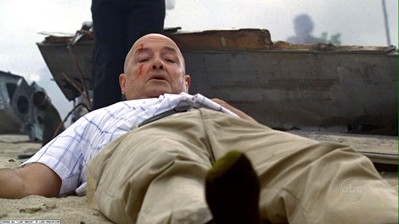
Project Adventure. Instructor: John Locke. No, "Lost" wasn't on television when I was a kid. At least not in this life. But the show (especially season 1) captures the spirit of what it was like to grow up in the '70's - running, exploring, chasing, and even fighting, with minimal intervention from established authority. At least in contrast to the structured, sterile upbringing of today's kids, my generation's childhood was tinted by a degree of "Lord of the Flies." The season one incarnation of Locke is a superhero of the natural and supernatural - a man who seems to know the solution to every problem. Don't tell him what he can't do!


Do you have any suggested "instructors" for additional courses? Please join in the discussion and share via the comments!

Thursday, March 24, 2011

Friday - A Tipping Point?

You've heard it. I've heard it. We've all (unfortunately) heard it. Rebecca Black's assembly-line abomination "Friday" has swept the nation over the past week with a ferocious, wildfire intensity. In case you haven't yet discovered it, it's the most ill-conceived, nonsensical, juvenile piece of fast-food pop "music" ever created. It also represents all that is wrong with society today. And, most painfully, despite all of that, I find myself like Odyseuss tied to the mast, unable to resist listening to this piece of garbage time and again.


But I have no intention of writing a lengthy rant against this affront to our senses and sensibility. Plenty of others have already assumed that mantle on Twitter, blogs, and YouTube. The video has received a proportionately overwhelming number of "dislikes" on YouTube, and the song has been called the "worst of all-time" by many. The "artist" herself has also been the object of many hateful attacks. And while I in no way endorse such bullying, I am fascinated by the intensity of the reaction, and what it represents.

It is my belief - and my desperate hope - that this incredible backlash represents a tipping point - the final straw for intelligent music fans who have finally had enough, for those who refuse to accept the insulting idea that this soulless trash can be passed off as music. If my theory is correct, we have crested the wave set in motion by the Jonas Brothers and Hannah Montana, and are about to be rewarded with several years of a return to great music.

Before you dismiss this theory as foolish optimism, realize that there is a precedent for such a revolution. In the late 1980's, kid-bands such as New Kids on the Block and slick, high-production/low substance acts like Milli Vanilli had taken over the music world. For me, the low-point of this era was January 28, 1991 - the night that Vanilla Ice was given an American Music Award for "Best New Artist." I remember watching the awards and feeling sick to my stomach; was I the only one who could see that Vanilla Ice was neither a musician nor an artist?

Luckily, redemption was only a few months away, and arrived in the form of an auditory shotgun blast known as Nirvana's "Nevermind." The album's lead track, "Smells Like Teen Spirit," ripped its way across MTV and radio stations with tidal wave force, and by the end of 1991 a full-scale musical revolt had taken place. Record stores at the time reported record numbers of returns following the holiday season; kids were returning Michael Jackson's "Dangerous," which they'd received for Christmas, and exchanging it for the raw, Seattle grunge of Nirvana. The King of Pop had been supplanted by a "new" form of music that represented a return to the dark, heavy, gritty sound of early "heavy metal" (early Led Zeppelin, Black Sabbath, Motorhead.)

Of course, this wasn't the first (and wouldn't be the last) time that music made a sonic retreat two decades into the past. In fact, this is a general trend that has repeated itself time and again. After the electric, psychedelic explosion of the late '60's, early '70's pop featured lush harmonies and singer-songwriters (James Taylor, the Carpenters, BJ Thomas, the Partridge Family) that recalled the doo-wop and Brill Building sounds of the late '50s and early '60's. The mid 1980's saw a brief return to late 1960's sounds and fashion (tie-dyed T-Shirts became stylish, the "Monkees" TV show was shown in heavy rotation on MTV, and Prince presented himself as a Hendrix re-invention). Early 90's grunge was a return to the sounds of 1970's guitar rock, and the 2000's of course gave us an overdose of boy bands and divas combined with an over-produced sound that emphasized machine over human - much like the late 80's.

So, what's next? With any luck, we'll see a horde of new bands trying to sound like Pearl Jam, Soundgarden, and Rage Against the Machine. That will be music to my ears - as long as they can lay off of the auto-tune!

Thursday, February 10, 2011

A Very Brady Surprise

Anyone who knows me well knows that I have always been a fanatical Brady fan. In college, I took great pride in impressing my floormates with the most obscure Brady trivia, and took any possible opportunity to convey the extent of my all-consuming Brady obsession. I can't look at applesauce without blurting out "Porkchops and Applesauce" in the voice of Peter as Humphrey Bogart, and I can't count the times I've admonished my oldest son: "mom always said don't play ball in the house!"

 I may have been an expert on Brady minutiae, but I certainly was not unusual in my cult-like worship of the program. The Brady Bunch was one of the first prime-time network shows to be syndicated nationally during after-school hours. During the mid-late 1970's, almost every elementary schoolkid in America came home every day to watch an hour of the Bunch. The show's warm, fuzzy vibe and innocuous plots combined with the relief of being released from the drudgery of spelling tests and dittoes (remember them) to create an hour of daily utopia. I've read many accounts of kids who grew up in troubled homes, and wishing they could live at 4222 Clinton Way. And even for those of us with happy childhoods, it was easy to get caught up in the fantasy world of silly problems that were solved in 20 minutes.

But over the years, I started to lose touch with the show. In the rear-view mirror of my memory, the show began to appear corny - a colorful, dated relic of the "groovy," "far-out" early 70s. In the cynical 90's and 2000s, it became easier and more fashionable to make fun of the show, laughing at it rather than with it. 1995's "The Brady Bunch Movie," while really funny and terrific in its own right, reminded all of us just how out of touch with reality the Bradys - and by extension, their die-hard fans - were.

Just a few months ago, I admitted to a friend that the Partridge Family was actually superior to the Brady Bunch - it was edgier, funnier, and more sophisticated went my argument. But during the week after Christmas this year, Walmart was running a special sale on Brady Bunch DVD's. For just over 5$ a season, I thought it would be worth reliving some of the childhood nostalgia, although my expectations weren't too high. I figured they'd be good for a viewing or two, and for a few laughs at the show's expense.

Two months later, though, I'm still watching the DVDs every day! My family and I have been through the entire series several times now. Not only has the show retained every bit of its after-school charm, but I was actually amazed to discover that it's also a good show. Sure, the plots are a little bit silly - but those kids can act! Or maybe it's not that they are even acting; maybe they were just very well-cast kids being themselves and having fun in the process. But whatever the case, somehow the Brady Bunch, against all reasonable odds, gets you to suspend belief for twenty-four minutes, and to accept that patchwork family as real.

Here are a few things that surprised me the most upon re-visiting the series:

1) The kids weren't perfectly behaved. Bobby acts like a real brat when he realizes he's the only one who didn't win a trophy. Marcia screams and throws tantrums, most notably when she's kicked out of the school production of Romeo and Juliet, and when she's mistakenly blamed for creating insulting drawing of her teacher ("Mrs. Denton, or a Hippopotamus?") Bobby, Jan, and Marcia all sneak out in the middle of the night. Peter wears a fake mustache to impress an older woman. Greg smokes, drives recklessly on the freeway, and brings the FBI to the house with his UFO fakery...

2) Alice was genuinely funny. Ann B. Davis made some terrific faces. It's like watching a skilled vaudevillian actress - every facial muscle is constantly acting and reacting. Sure, here jokes are hokey, but they fit the character, and Davis' hard work and artistry help to turn the corn into actual humor.

3) The soundtrack music was like an extra character on the show. There seemed to exist dozens of variations on the main theme...clunky, slunky, mischievous, serene, bright, groovy! On the DVD pilot commentary, Sherwood Schwartz mentioned that music director Frank DeVol could "make the music do anything." Watch just one or two episodes, and you'll see that he's absolutely right.


And a few things that weren't so surprising:

1) The show takes a laughably generic approach to pop/rock music! Greg is all bummed out when he gets grounded and can't take Rachel to "the rock concert." Whenever the kids listen to "groovy music" on their huge AM radios, you can hear what sounds like the Dating Game theme blasting out. When Greg becomes Johnny Bravo, his agent works for "Big Hit Management Company." And Davy Jones is portrayed by Bobby and Peter as a guitar-wielding rock god.

2)  The Brady's all live a charmed life. When Marcia loses her diary, Desi Arnaz jr. (the subject of many of her diary entries) shows up to return it. Greg's math teacher, Linda, just so happens to be dating Dodgers' first baseman, Wes Parker, who just so happens to stop by after school when Greg is getting extra help for math. Davy Jones honors a form-letter promise and sings at Marcia's prom. Alice has an identical cousin. And Joe Namath stops by to pay Bobby a deathbed visit, but agrees to play football in the yard after he finds out Bobby's faking...

Most importantly, though, I came to realize that there was no need to view my childhood love of the Brady's as a guilty pleasure. Maybe it's because, amidst the backdrop of the current recession and political turmoil, we all need something happy and safe, like the Brady Bunch. Maybe it's because I'm too old to care about what's cool. Or maybe it's because we Brady fans really had great taste all this time...

Wednesday, November 17, 2010

Rosalita

Media usually works on us in subtle, gradual ways. We hear a jingle so many times that it gets stuck in our head, and over time we become convinced that Oscar Mayer wieners are a superior brand. We watch 100 episodes of "Friends" and, after a while, start to actually believe that our lives should also be that easy and frivolous. Ultimately,  the things we see and hear on TV can affect how we feel about ourselves, our goals, our lives -but it happens so slowly and imperceptibly that we usually don't recognize it.

But, there are also those media moments that transform us instantly. Many people around my age talk about this happening when they saw Star Wars for the first time, as young children. The world, after they left the theater, somehow looked different, more exciting and more alive, and full of more potential, than when they had walked in.


And in the movie, Almost Famous, there's a terrific scene near the beginning of the film, just after young William's sister leaves home. She tells him to check for something she's left him under the bed, and he finds a satchel full of her vinyl record albums. He sits, awed and open-mouthed, running his fingers over Led Zeppelin II, Wheels of Fire, and Axis Bold as Love as if they are holy relics. She also leaves him a note scribbled on a slip of notebook paper: "Listen to 'Tommy' with a candle burning and you'll see your entire future." And there's no question that young William's life will never be the same.

My "Almost Famous" moment happened in 1983, courtesy of MTV - back when MTV actually used to play music! Now, I had, of course, heard of Bruce Springsteen before. I'd heard "Born to Run" and "Hungry Heart" on the radio, but at the time I kind of lumped Bruce into the same category as other radio-friendly bands, like the Cars and REO Speedwagon (as embarrassing as that is to admit). Anyhow, one afternoon Martha Quinn introduced a "new" (actually recorded in 1978, on the Darkness on the Edge of Town tour) Bruce Springsteen video. I couldn't believe what I was seeing and hearing. The music, the performance, the audience frenzy, the girls mobbing Bruce onstage, were so over the top, so thrilling, that I couldn't  keep my mind on anything else. For weeks, I'd camp next to the television, waiting for the next time they'd play Rosalita.

Not only is Rosalita a fantastic song, but this performance also captures, absolutely, everything that makes Springsteen great. Springsteen is unabashedly melodramatic, beyond the point of corniness, yet at the same time completely cool. The only way he pulls this off is by being 100% committed to his music, his performance, and the spirit that inspired it. And in indulging so completely himself, it gives the rest of us permission to lose ourselves in the music, as well.

As an awkward 9th grader struggling with my image, this video suddenly opened my eyes to my own potential possibilities. Bruce Springsteen was cool and I wasn't, but listening to (and vicariously living) his music made me instantly feel more worldly, more adult, more hip. My friends had regular names like Mike, Ted, and Cathy. Springsteen's characters were much more colorful: Jack the Rabbit, Weak-kneed Willy, and Big Bones Billy. Even the people in his real-life band were larger than life - the Professor, the Mighty Max, and of course, the Big Man. I longed for the boldness and wit to have sidekicks with such monikers.


More specifically, this video set in motion the chain of events that led me to start playing the guitar. Socially, I was too awkward to express myself in words. Rock music and the guitar gave me a way to do so with much more confidence and assurance, and helped me to find my real personality as an adult. Over the years, I've taken one very important cue from Rosalita - to put every ounce of energy into every performance, to get lost in the music and the message, and to forget about how I was perceived. That's a tough lesson to learn, but Rosalita was a great teacher.


Monday, November 1, 2010

The Fonz's Ravioli (AKA "15 Great Things About "Lost" - Thing #2")

When I was in elementary school, Happy Days was my favorite prime-time show. With its then-unusual teaming of "nerdy" characters like Ralph and Potsie with the "all-American" Richie and the almighty Fonz (as corny as his character may seem in retrospect, he was very edgy and cool at the time), the show in its early years offered plenty potential for brilliant comedic situations. When you tuned into the show, you expected to laugh, and to be entertained in a very lighthearted, easy manner.

But there's one classic Christmas episode that stands out as one of the greatest Happy Days moments of all because it unexpectedly breaks from its established tonal pattern. The show begins with the Cunninghams celebrating Christmas Eve by decorating the tree in their living room. Mr. C grumbles that he just wants to have a quiet holiday at home with his family and no outsiders. But when the mechanical Santa on their front lawn goes on the fritz, Richie and his dad drive out to Fonz's garage, and see the "greaser" sitting alone in the dark, eating cold ravioli from a can. Contrasting with the show's dominant comedic tone and the Fonz's ultra-cool demeanor, this scene immediately establishes itself as a classic - touching, poignant, and real.

So, what does this all have to do with "Lost"? In my last post, I discussed the importance of ambiguity in the series, and in art in general. If ambiguity is an element that appeals to us intellectually; a story's ability to shift quickly and abruptly between moods and tones is its emotional analogue. Happy Days pulled off a remarkable moment with "Guess Who's Coming to Christmas," but "Lost" regularly navigates similar emotional extremes with shocking abruptness.

One of my personal favorite episodes is season 5's "Some Like it Hoth,"  which combines so many things I love: time travel, the 1970's, Star Wars. While driving around in the Dharma van, Hurley presses Miles about his relationship with his father; Miles insists that his dad was no good - he didn't care about him, and basically abandoned his family. Hurley, who is in the process of "pre-writing" "The Empire Strikes Back" (with a few improvements), lightens the mood by joking about how Miles should take advantage of time travel to "experience changing his own diaper." Suddenly, against this backdrop of light banter and camaraderie, the show drops one of its emotional bombs: while walking through Dharmaville to deliver a "package," Miles peers through the window of the house where he was born, and witnesses his father joyfully reading a storybook to his infant incarnation. I remember the first time I watched this episode: the moment was so touching, so unexpected, and contrasted so startlingly with the previously established mood, that I felt emotionally exposed. Damn "Lost," I thought - they got me again.

And that wouldn't be the last time that the show would surprise me. The funeral of the actual John Locke was a heartbreaking moment - some even saw it as evidence that Locke's faith had amounted to nothing - and Ben's surprisingly honest confession added to the poignancy of the scene. I'll admit that I got choked up at this point - and seconds later laughing out loud at Lapidus' "This is the weirdest damn funeral I've ever been to" comment. And the moment after that, I paused the DVD to take a moment and appreciate just what an incredible show "Lost" is because of these emotional mousetraps it springs on the audience.

One thing is for sure about "Lost" - you never knew what you would experience next. I'm still waiting for the deleted scene where Jim La Fleur watches the Fonz eating ravioli on his Dharmaville TV set...

Saturday, October 2, 2010

15 Great Things About "Lost" - Thing #1

Well, call me a "Lostie."* Two months ago I had never even heard the term, and had completely no idea what I had been missing.Quite honestly, I had always kind of thought that "Lost" was a dramatized version of "Survivor" - and those who know me well know how much I hate reality TV. What I didn't realize, until my work friends persuaded me through their all-consuming obsession with the show, was that "Lost" has almost nothing to do with surviving on an island. Well, I mean sure, it would appear that way at first. But once you scratch the surface of this fantastic phenomenon, you see that it's about so much more.


I started watching the series with Season 1, Episode 1 on August 17, 2010. It didn't take long to realize that "Lost" was the mass media equivalent of the potato chip;  for the next 40 days and 40 nights, I watched episode upon episode, sometimes as many as five or six in a day. When my wife and I weren't watching the show, we found ourselves constantly talking and thinking about the characters and conflicts, and wondering about the show's mysteries. Before I knew it, I was beginning to view life through "Lost"-colored lenses. As many fans will tell you, "Lost" is a life-changing experience.

Yet, I've also found that it's very difficult to explain the show's powerful allure to the uninitiated ("Others," I now call them). Friends and colleagues who haven't seen the show cast smirking glances at me and my Lostie friends as we frantically debate the exploits of the smoke monster, the details of the Dharma Initiative, and the significance of the sideways-flash. This series of posts, then, is an attempt to explain the unexplainable: to analyze and describe 15** things that make "Lost" a masterpiece - and hopefully convert some doubters in the process. Here, I focus on just one of the 15 - stay tuned for more!


Thing #1. Ambiguity - Way back in 1995, I was privileged to attend a lecture given by the great Kurt Vonnegut. That evening, he presented a concept that has informed my appreciation of great literature and media ever since: the key to a great story is ambiguity. In a truly great work, he claimed, you're never 100% sure what to think or how to feel. While you might get a kick out of a movie like "When in Rome," the plot is predictable, and it's pretty clear how you're "supposed to" feel at the film's conclusion; consequently, there's not much to think about or discuss afterward. By contrast, the book/movie, "Of Mice and Men" leaves you thinking. In a practical way, George is free of the burden of watching over Lennie, and he probably gave his friend the most merciful death possible. But he's also left friendless, and must live with the memory and consequences of the decision he made. When I first read the book as a teenager, the ending stayed with me for weeks.

On the ambiguity front, "Lost" delivers in spades.While watching the first season, I'm sure most viewers were pulling for the survivors to find a way back to their old lives. But as the series winds on, it becomes difficult to believe, with any certainty, that they'd be any better off.

At first, the "Others" seem strange, menacing, sinister. By season 4, you begin to wonder who the real "Others" are. Ben's people? The Castaways? The freighter people? Everyone and anyone from the outside world?

And what happened to Sayid? Dead? Dead inside? Zombified? Possessed? Or maybe just being manipulated? Such haziness is one of the show's hallmarks, and perhaps the greatest ambiguity of all is its title. Does "Lost" refer to being stranded on an island? Does it refer to the fact that all of the castaways are missing something significant in their "real lives"? Does it refer to the way the viewers feel as they attempt to pin down the details of the island's time/space location?


When the show's network run concluded back in May, 2010, a fair number of fans felt that the finale provided a satisfying conclusion to the epic. A similar number responded angrily, outraged that the show had failed to "answer all of the questions" that it had posed. For instance, Jacob's explanation of the island as a "cork" that is the "only thing keeping the darkness where it belongs" (where the Darkness actually belongs, I might add, is on the Edge of Town, but more about that in November...) apparently didn't sit well with scientific-minded viewers who wanted a more concrete explanation. But what possible explanation could the show's creators have provided that would possibly satisfied such a need? And wouldn't doing so have robbed the rest of us the chance to do what we love doing so much: searching for answers?

"Lost", I am certain, will continue to fascinate and thrill new and repeat viewers alike. I surely hope that, years down the line, I'll still be trying to figure out why the frozen donkey wheel deposits its manipulators on Tattoine (er... in Tunisia, I mean) and wondering how Jacob chose his candidates. But without the ambiguity, the show would end up much like the seasons of "24" that I've enjoyed - shows that provided short term excitement and intrigue, but that I have no need to watch, or even think about, again.


* Contrary to popular opinion, "Lostie" and "Loser" are not interchangeable terms.
** I thought 10 would be more manageable, until my friend Cindy reminded me that "10" is not one of "the Numbers." But hey - 15 will be no problem; that's how great of a show it is! Just don't be surprised if I end up writing 23, or even 42, installments.

Thursday, September 9, 2010

Zefirelli vs. Luhrmann

Back in 1996, when the newer version "Romeo and Juliet" was in production, I was very excited about the concept of an updated version of the classic. I do believe that the story and characters are timeless, and felt that the play would work well in a modern setting. As an English teacher, I was also enthusiastic about having an interesting new interpretation to discuss with my students. 

I remember sitting in the theater watching the opening prologue. It was amazing - maybe one of the most "epic" things I've ever seen on screen. "Wow," I thought - this is going to be really intense, really incredible...

And then the gas station scene. After watching this scene the first time (and I've probably seen it 20 times since, which has only served to confirm my opinion) it became pretty clear that the director and actors had no idea what was really happening in the scene. The actors are screaming and yelling for no reason. There's a difference between passion and screaming, but this scene (and many other parts of the film) fail to make that distinction. It also attempts to be funny, but only manages to be goofy. The scene is colorful, but distractingly so - shooting arcade style effects, lightning-fast editing, and a very strange mix of silly sound effects and sight gags all take away from the severity and gravity of the Capulet/Montague conflict.

In watching the Zeffirelli (1969) version, you get the idea that this conflict affects everyone in Verona - the woman crossing the street with her baby, the merchants selling produce on the street, the combatants who lose their lives in the fight. In the newer version, a gas station blows up, and maybe causes a traffic jam. True, this is flashier, but doesn't have the large-scale societal impact of the fight scene in the original version.

And speaking of fight scenes - the 1969 version is more "violent", really - characters hurt, rather than scream at, each other. The fight begins in an understated way, with characters joking and taunting each other, and escalates in a much more believable fashion than the fever-pitched 1996 opener.

Ultimately, the 1996 version doesn't give the viewers - young people, in particular, very much credit. It seems to imply that all dialogue must be screamed for anyone to pay attention, and that flash and style can make up for real acting. At the very least, the actors could have taken the time to understand what is actually happening, and why their characters were saying what they were saying.

I really wanted to like the 1996 movie, I really did. Hopefully, a new version will come along sooner or later that can breath some new life into this classic in a truly meaningful way.

Friday, August 20, 2010

Joltin' Joe, Hammerin' Hank, and the History That Ruth Built


"Where have you gone, Joe Di Maggio, a nation turns its lonely eyes to you..." - Paul Simon

Lately, Paul Simon's words have begun to seem all too relevant. America is reeling economically, environmentally, and spiritually. Amidst massive oil spills, an ongoing war, widespread poverty and unemployment, and political polarization, mainstream news outlets continue to assault us with Kardashians, "Housewives," and the "Jersey Shore."

Back in the mid 1970's, America faced a similar state, as it dealt with the aftermath of Vietnam, a failing economy, the turmoil of Watergate, and a massive gasoline shortage. At least for a while, in the spring of 1974, baseball gave us a noble hero, whose honorable quest to break Babe Ruth's home run record gave us something to feel good about and distract us from our woes. This hero was Hank Aaron -- a quiet, humble, persistently skilled man who personified traditional American values and work ethic.

"There is something warming and elegant about Hank Aaron's long conservation of his powers, but lifetime records lack urgency. This was not a sudden prodigy, like batting over .400 or hitting sixty home runs in a single season. Babe Ruth was prodigious; Bad Henry is -- well, historic. " This excerpt from Roger Angell's "Landscape, With Figures,"* was written in 1974, shortly after Hammerin' Hank had etched his name into history as the greatest, and perhaps baseball's final, true home run king. Angell, in his usual elegant prose, hones in directly on the essence of the accomplishment - a lifetime of consistently outstanding performance. Note Angell's wording: "conservation of powers;" here, he isn't referring to power in the ESPN-era, in your face, highlights-only sense. By "powers", Angell likely alludes to health, consistency, and, ultimately, self-discipline.

Just look at a photo of Hank Aaron, and you'll see what appears to be a mere mortal - an ordinary man who has transformed himself into a hero through perseverance and dedication. It was not hulk-like biceps or self-aggrandizing pride that gave Aaron the power to lift American spirits; it was, conversely, his humanity that allowed the common citizen to identify with his struggle, and to find redemption in his success.

And that is exactly why, in the midst of our current national slump, it is impossible to find inspiration in baseball's latest "heroic" offering: Alex Rodriguez. Sure, A-Rod has hit 600 baseballs that exited various major league stadiums, and has occasionally delivered a timely hit in a big spot. But, at nearly every key juncture of his career, he has managed to distance himself from the ideals of the common man and the ethical standards that we expect of our heroes and role models. Whether slapping the ball out of Bronson Arroyo's hand in the 2004 ALCS, distracting an opposing fielder by shouting like a sore-headed little-leaguer, or preening across Dallas Braden's pitching mound, Rodriguez has demonstrated little awareness or concern for the spirit and tradition of the game, and has shown himself to be a braggart, a cheat, and a coward. And this is before performance-enhancing substances even enter the conversation.


Of course, when you consider the impact of steroids upon the historical structure of the game, the recent A-Rod milestone reveals itself as not only a false accomplishment, but as a destructive threat to one of the great pleasures of baseball fandom. Roger Angell wrote that "the statistics of baseball form the critical dimensions of the game", and that "the ballplayers on the field are in competition not just with the pitchers and sluggers of the opposing team but with every pitcher or batter who ever played the game, including their past selves." Comparing and weighing the merits of one's favorite players against those of other eras and generations is a time-honored pastime which has filled countless hours in the off-season, and served as fodder for millions of barroom debates. Such discussion, though, relies upon the strong foundation of baseball's rules, and the reasonable assumption that, because the game is still played today the way it was in 1927, a player's performance and ability can be gauged in terms of the numbers. Once you introduce steroids into the argument, however, the sacred numbers no longer offer a firm basis for comparison, and a necessary ingredient for true appreciation of the game as a tradition is destroyed. For this, we can thank A-Rod, Mark McGwire, almost certainly Barry Bonds, and ESPN, which has helped to create the culture in which the me-first mentality trumps concern for ethics.

It's not too difficult to understand why Paul Simon appealed to Joe DiMaggio for salvation, and he certainly wasn't the first to do so. In Ernest Hemingway's "Old Man and the Sea," Santiago feels a kinship with DiMaggio, partly because of his background: "They say his father was a fisherman. Maybe he was as poor as we are, and would understand." The old man also continually affirms the greatness of Joltin' Joe, placing faith in his hero and ultimately using his example of  "playing through pain" to see him through his own ordeal at sea. A-Rod may have also transcended humble beginnings to find fame and fortune in the big leagues, but the similarities end there. While DiMaggio was known for dependability and cool under pressure, Rodriguez has, for the most part, left Yankee fans angry and frustrated at his failure in clutch playoff situations.

And that's why I find Yankee fans' reaction to the 600 homer hoopla so puzzling. Last week, when #600 occurred, several of my Yankee-loving colleagues joyfully whooped it up. The way I see it, though, a Yankee fan should be the last person to actually get behind Rodriguez, especially as he approaches the hallowed domain of a true Yankee legend, Babe Ruth.

If it's not already apparent, I'm not a Yankee fan. I am, however, a true enough fan of baseball to acknowledge the significance of the Yankees as a baseball institution. In many ways, the Yankees are baseball, and outside of the U.S., the Yankees are America.The pinstripes, the logo, the stadium, the monuments, the iconic players - all embody baseball's proudest and most accomplished franchise.

While I've often argued that being a Yankee fan is too easy, and that rooting for a team like the Mets or Red Sox is a better exercise in character-building, the Yankees and their fans do shoulder a different burden: the weight of historical reputation. Yankee fans are privileged to bear the pinstripes, and to see the best assemblage of players that money can buy, year after year. But they are also the guardians of baseball's greatest legacies - Ruth, Gehrig, DiMaggio, Mantle, Munson, Guidry, Rivera, Jeter. Alex Rodriguez has no business being listed with these immortals, and true Yankee fans should recognize that doing so soils the fabric of Yankee tradition. A casual baseball observer might be excused for getting excited about the number "600," but a Yankee fan should know better. If you love baseball, and all that it means and has meant as an American tradition, you should reject A-Rod and all he represents.

Call me an idealist. Call me naive. Tell me that the game has changed, and that it's all about the numbers. I'll just keep listening to Paul Simon and hoping that a true hero will emerge to give baseball, and America, what it needs the most right now.


* Excerpted from "Five Seasons: A Baseball Companion" by Roger Angell. Simon and Schuster, New York, 1977. A must-read for fans of baseball and writing.